

Publication Date: October 6, 2026
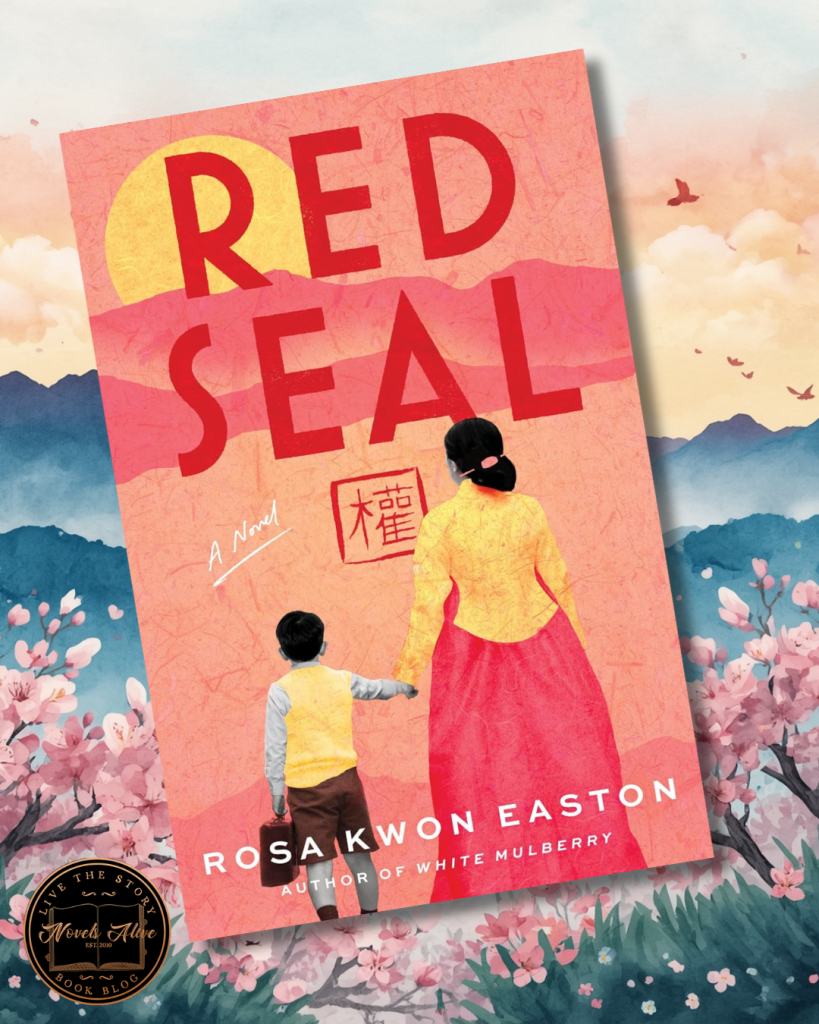
A Korean mother and son navigate wars, displacement, and identity across decades and borders in a moving multigenerational saga by the author of White Mulberry.
In 1943 Japan, the Pacific War rages on. Miyoung, a Korean-born single mother and nurse, defies an order to serve in the Imperial Japanese Army and instead flees with her six-year-old son, Ko-chan, who is leaving everything familiar behind, including the grandparents he loves. Miyoung hopes Ko-chan will finally claim his heritage and that she can reclaim her own as well.
Miyoung promises her anxious son an adventure. Their life-changing trek to Miyoung’s homeland takes them first to Japan-occupied Manchuria, where Miyoung’s brother offers shelter and Ko-chan, coming of age, begins to question where his future lies. When Japan’s defeat in World War II forces them to escape again, it triggers a decades-long odyssey of survival, sacrifice, and—for the generations to follow—a search for identity across three nations.
A powerful tribute to the endurance of family bonds, Red Seal explores the struggle to define oneself when torn between multiple worlds and by cultural upheaval, and the resilience it takes to find a place to call home.

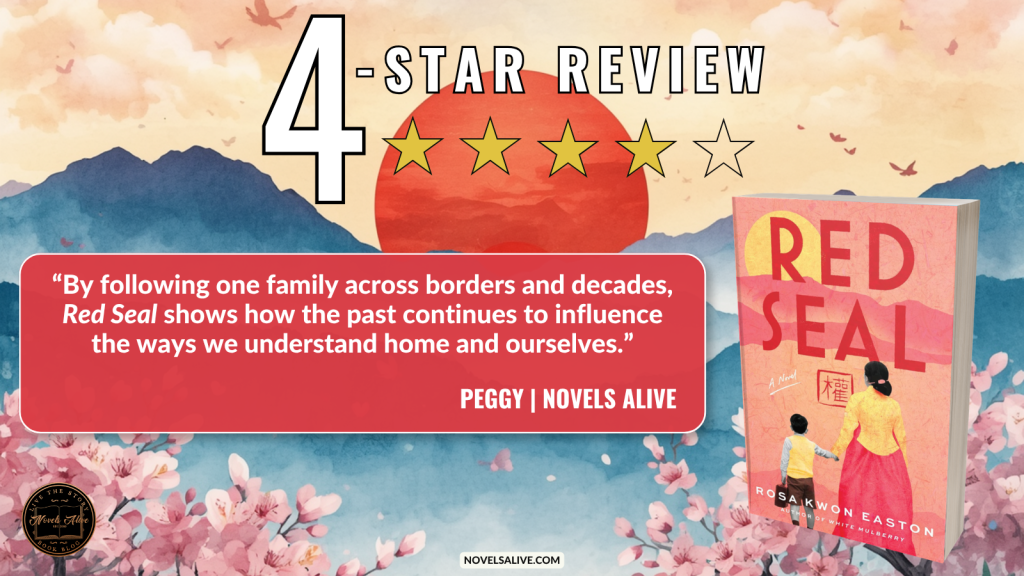
A mother and son displaced by war undertake several hazardous journeys to find home in Rosa Kwon Easton’s harrowing novel, Red Seal.
A sequel to Easton’s White Mulberry, the story picks up in 1943 Japan as Miyoung, a Korean-born single mother and nurse, flees the country with her six-year-old son, Ko-chan, to avoid impressment into the Imperial Japanese Army as a medical worker. Recently widowed, Miyoung refuses to be separated from her son, and they begin a decades-long journey to find their way back to Korea and the heritage they had to hide whilst living in wartime Japan.
Miyoung and Ko-chan leave behind Ko-chan’s beloved grandparents. But Miyoung is adamant that Ko-chan meets his other Korean relatives—like Miyoung’s brother, Taeyoung—and embraces his Korean identity. In Japanese-occupied Manchuria (China), Miyoung reunites with her brother, who becomes “Uncle Chocolate” to an adoring and impressionable Ko-chan. But World War II in East Asia did not provide a safe or stable environment for long, and soon Miyoung and Ko-chan must stay one step ahead of the Japanese Army and those who mistake them for Japanese.
A compelling and fascinating theme of Red Seal is the history surrounding the Korean diaspora during the Second World War and how this impacts identity and one’s sense of community. By the time the Japanese Empire falls, Ko-chan will resume his Korean name of Soonho, and the novel follows that naming convention to its conclusion. Easton reveals through a third-person viewpoint the confusion, loneliness, and isolation young Ko-chan/Soonho feels as he moves from place to place with Miyoung. As he grows older and Miyoung remarries and has another child, he learns more of his culture yet still harbors trauma and disagreements with his mother.
The story spans several decades, and Easton packs in enough history to delight the hardcore historical fiction fans. However, there are no flights of lyrical fancy in the prose; it reads as if a story is being told from a far distance, with emotions revealed but never fully felt. As Miyoung and Soonho live through the final days of WWII, they will then navigate the division of Korea and the Korean War as well.
What stands out most in the novel are the experiences of people displaced by war, while the emotional center focuses on the thorny issue of “home.” Home, in this iteration, is not a single fixed location. It becomes something they must reconstruct through family, memory, names, language, and cultural connection.
By following one family across borders and decades, Red Seal shows how the past continues to influence the ways we understand home and ourselves.




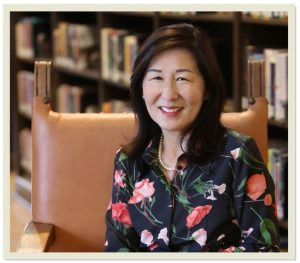 Rosa Kwon Easton was born in Seoul, Korea, and grew up with her extended family in Los Angeles. Easton holds a bachelor’s degree in government from Smith College, a master’s in international and public affairs from Columbia University, and a JD from Boston College Law School. She is a lawyer and an elected trustee of the Palos Verdes Library District. She is an Anaphora Writing Residency Fellow, and her work has been published in CRAFT Literary, StoryCenter.org, Writer’s Digest, and elsewhere. She has two adult children and lives with her husband and Maltipoo in sunny Southern California.