


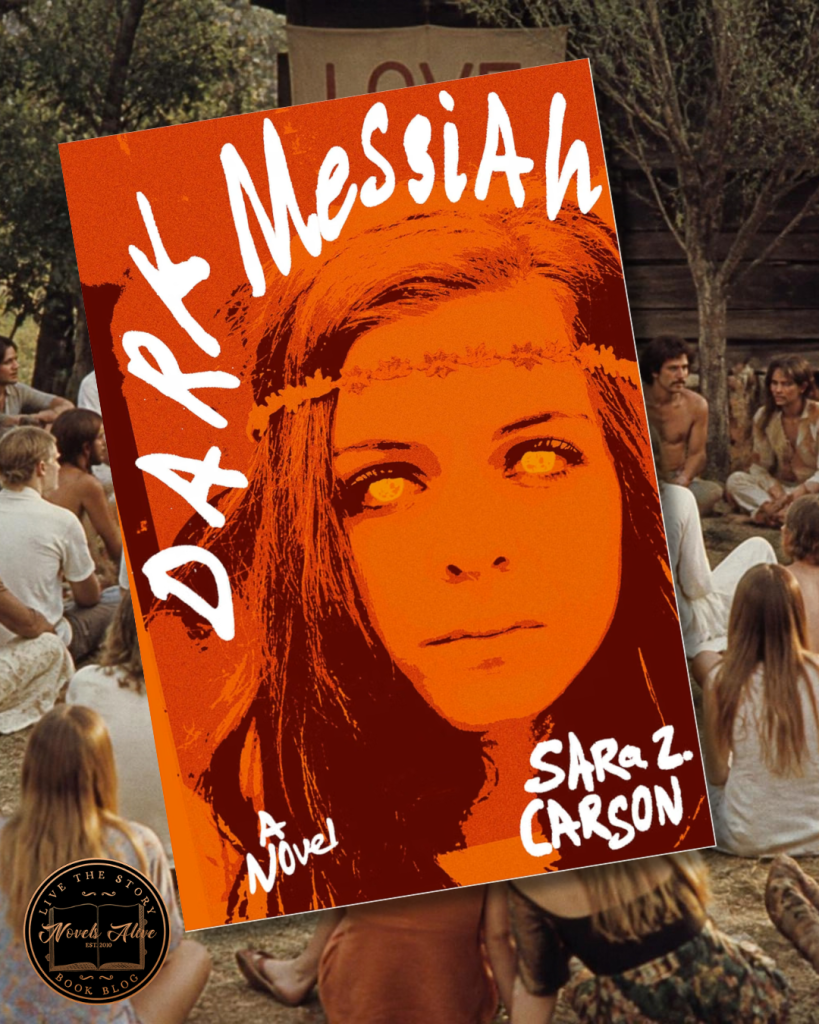

Publication Date: October 20, 2026
A riveting debut novel telling the story of a teenage girl and her mother caught in the web of a sinister cult leader whose optimistic vision of hope descends into apocalyptic horror in the jungles of South America.
In 1975 San Francisco, 15-year-old Nell’s world has been ripped apart by her younger sister’s sudden, tragic death and her parents’ subsequent divorce. As her mother desperately reaches out for solace from any quarter-new hobbies, new philosophies, new relationships-a boyfriend leads her into the cult of a charismatic man known as Father. His message of peace and healing proves irresistible, and soon Nell and her mother join his mysterious Church of the People.
As they are drawn increasingly into the vortex of the Church, the community comes to consume their lives, and Nell’s concerns begin to build. She becomes enrolled in the school they operate, is intimidated into adopting their ways of dressing and acting, and is removed from her home.
At the same time, the dangers lurking in the cult’s shadows emerge: threats, physical abuse, and the sudden disappearances of members to Father’s new “utopian” community deep in the jungles of South America. When Nell is secreted there alongside their fellow followers, they come under Father’s power as never before-with horrific and devastating consequences.
By turns sensitive and shocking, powerful and poignant, Dark Messiah is a story of a girl becoming a woman as her life is stolen from her-and a mesmerizing debut from a new voice in contemporary fiction.

In Sara Z. Carson’s magnetic debut, a teenage girl and her mother fall under the spiritual spell of a dark-haired cult leader in Dark Messiah.
Cornelia “Nell” Sterling is a fifteen-year-old girl adrift in 1970s San Francisco, living with her recently divorced mother, Faye. A child of privilege and wealth, Nell rebels in the usual ways against Faye’s haphazard and flighty parenting, fallout from the traumatic death of Nell’s younger sister the year before. With her father, Trip, far away on the East Coast with a new girlfriend, Nell can only watch as her mother tries on a variety of new men and spiritual practices. When Faye’s latest boyfriend introduces her to the Temple of God’s Everlasting Love and its enigmatic leader known to all as “Dad,” Nell comes along and finds a place and people who may finally accept her. But it is the beginning of a nightmare neither can predict.
Thinly veiled on Jim Jones and The People’s Temple, Carson takes a familiar story and excavates deep inside the hive mind of a burgeoning cult and its sinister slide toward apocalypse. Told from Nell’s point of view (and from a distance), the story begins in 1976 with a couple of flashbacks to 1974 that reveal how Nell’s sister died and how her parents’ marriage fell apart afterward. Despite joining the church together, Nell and Faye become even more estranged, which isolates Nell and forces her to rely on her own instincts—which, at fifteen, are not fully developed. Carson captures the guile of Nell’s age when she first begins to watch Dad preach his political sermons to his flock:
It was uncanny how these strangers listened to him, hypnotized. How we all listened to him. I believed everything he was saying, too, this strange mix of unvarnished and reconsidered American history, of the wrongness of the Bible—even if he’d likely heard it from someone else rather than discovered it through his own divinity.
The welcoming community enchants Nell, a lonely and guilt-ridden girl doubting her own existence, who eagerly signs on to the crushing work duties and prescriptive nature of Dad’s commands. When Nell transgresses during a work trip, she soon discovers what happens when people disobey Dad. Carson’s prose is sharp and descriptive in revealing the ways cults control their members through fear, guilt, and verbal and physical humiliation. Rather than turning Nell against Dad and the Temple, Nell’s punishment drives her further into the cult’s mindset.
Carson’s pace is tense and dripping with foreboding, especially when Nell learns about Dad’s planned “utopian” experience in the jungles of South America called Concordia. While Dad preaches to the masses about his paradise in Concordia, Nell wonders if it could be true, only to find herself suddenly sent to South America without a word to her mother or father. The portrait that Carson draws of Concordia resembles that of the real Jonestown, but she shows it to us from the inside out—through the eyes of a naïve and brainwashed teenage girl, which makes the real-life tragedy even more devastating to consider.
When Dad finally arrives at Concordia months later, the small taste of freedom she and other workers have enjoyed transforms into a state of enslavement overseen by Dad, his son, and innumerable lackeys toting shotguns and rifles. Nell, who narrates from a later vantage point of maturity and knowledge, is a plaintive character who is honest throughout about what she felt in the moment, whether cheering on the abuse meted out by the microphone-wielding Dad in the open-air pavilion or dully accepting her role as one of “Dad’s girls.” The fever-pitch ending of the novel is not a surprise, but Carson captures the surreal terror in unflinching prose that is unsettling.
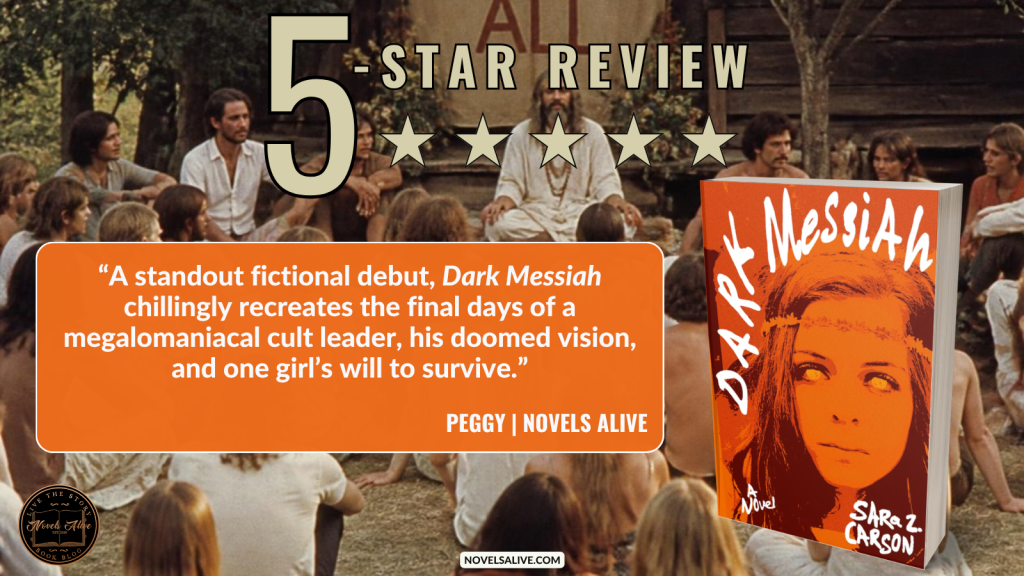
A standout fictional debut, Dark Messiah chillingly recreates the final days of a megalomaniacal cult leader, his doomed vision, and one girl’s will to survive.





 Sara Z. Carson is a public relations professional who lives with her family in Brooklyn. This is her first book.