

Publication Date: March 10, 2026
The New York Times bestselling author of Whalefall and Angel Down dives into a horror movie classic to examine his favorite film’s importance to our history, culture, and psychology—a perfect blend of research and memoir for fans of the movie, the genre, and beyond
Daniel Kraus first saw George A. Romero’s Night of the Living Dead when he was five years old. Through watching it approximately three hundred times since, Kraus discovered the many ways the film is tied to his childhood trauma and how its influence has carried into his adulthood. He couldn’t help but wonder: Are there other admirers of the film out there who feel the same?
Partially Devoured uses a frame-by-frame deep dive into Night of the Living Dead to produce a kaleidoscopic cultural investigation of the film’s importance and to examine the author’s early life of rural isolation and local violence.
Careening from film analysis to rabbit-hole tangents, Partially Devoured will take readers from screaming laughter to the depths of grief, all while illustrating how a beloved genre film has woven itself into so many facets of our lives.

In Partially Devoured, bestselling author Daniel Kraus conducts a spellbinding frame-by-frame autopsy of George A. Romero’s iconic zombie classic and its far-reaching impacts on cinema and his life.
Kraus first watched Night of the Living Dead with his mother when he was five years old. The movie, his mother, and his favorite blankie soon became “proxies of safety, happiness, contentment.” By his own reckoning, he has seen the film more than three hundred times…and he’s not stopping any time soon. Not prone to “fandom,” Kraus makes one exception for the 1967 black-and-white film about the dead coming back to life to feast on the living. With his extensive background writing for television and film, Kraus brings a trained eye to Romero’s archetypal work as he breaks down the film’s cast, characters, story, and special effects in extensive detail.
Each chapter begins with a time stamp within the film itself, starting with the movie’s opening frame at 00:00:00, one that Kraus admits he cannot “imagine a deader shot to start a movie about the undead, a shot more drained of life, urgency, and momentum.” It is the long shot of Johnny and Barbra driving to the cemetery to lay a wreath on their father’s grave, where they will encounter Zombie #1, and Barbra will run for her life to an isolated farmhouse. Kraus impresses with his surgical analysis of myriad aspects of the film and its closely-knit cast and production team; he knows this movie backward and forward and seasons his narrative with oodles of fun trivia and six-degrees-of-separation factoids that Night of the Living Dead fans—and genre fans, in general—will love.
Kraus’s unique frame-by-frame and scene analysis encourages readers to cue up the movie in the background to follow along, as he deconstructs what we are watching, often describing familiar moments in fresh, original hot-takes. For example, the farmhouse, where most of the movie is set:
“Consider again my dark speculations on lonely farmhouses. Disease doesn’t respect family acreages or barbed-wire fences. It runs wild, ends up in the groundwater. What’s rotting inside these kitchens, bedrooms, and sheds are the same things rotting America’s guts.”
In discussing the cultural impact of the movie, Kraus points to the revolutionary act of casting Duane Jones, a Black man, in the lead role of Ben. The racial tensions of the 1960s made this decision a revolutionary one, Kraus contends, but from an acting standpoint, it was an easy choice: Jones was “an artist of the truest stripe,” Kraus enthuses. Duane/Ben became his idea of what a hero should look and act like. Perhaps more importantly, he notes, Jones became a hero to an entire community: “What Jones has meant to me can’t possibly measure up to what he has meant to Black audiences.”
Kraus easily moves from the macro to micro, cheekily pointing out features in the background most viewers gloss over—the headstone next to the fictional father’s grave is that of a Union Civil War soldier, one example of dozens—as well as the countless flaws that make him love the film even more. Afterall, he reminds us, “you find the humanity of creators in their imperfections.”
Kraus balances sequential film analysis with frequent rabbit-hole tangents that are a veritable buffet of zombie facts and trivia. His prose is also just plain hilarious. In describing the near catatonic state of the female lead, Barbra (factoid: the name was misspelled in the final credits and never corrected to “Barbara”), Kraus calls the couch she sits on for most of the film the “Sofa of No Opinion.”
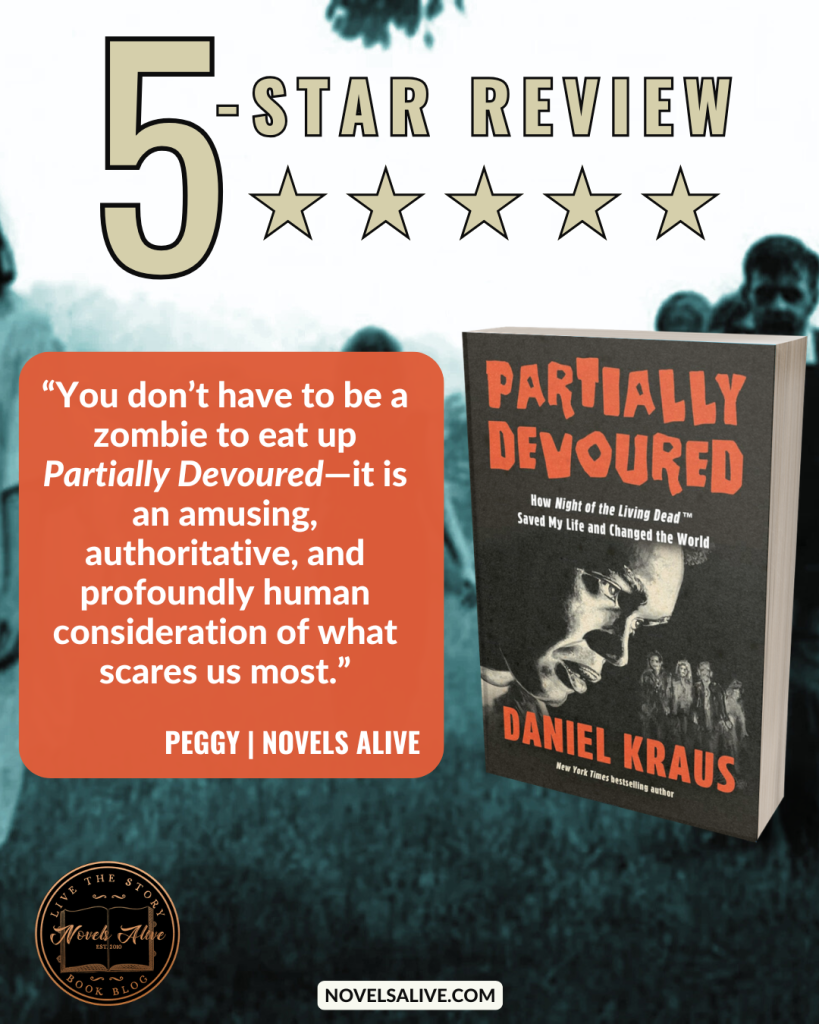
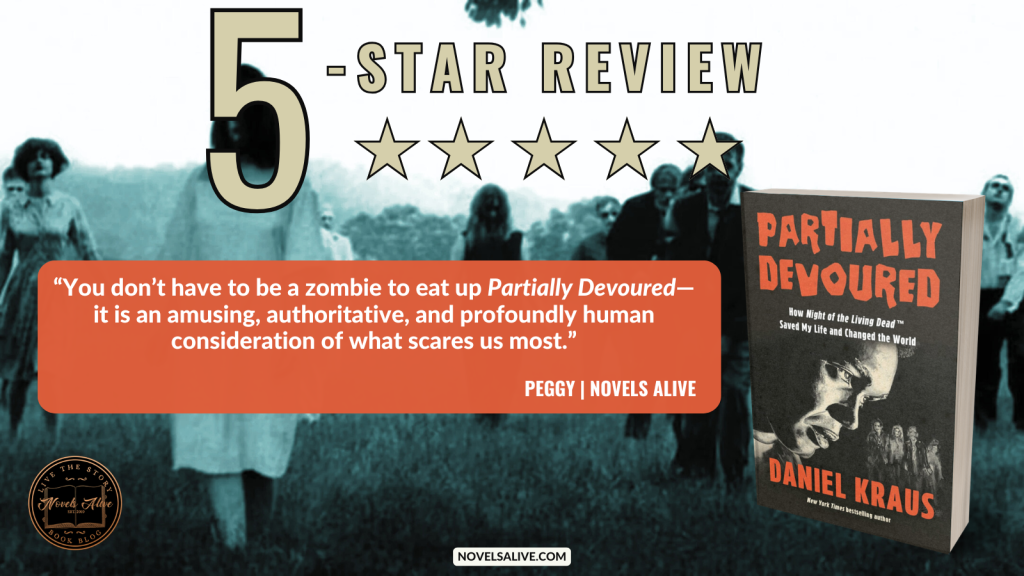
You don’t have to be a zombie to eat up Partially Devoured—it is an amusing, authoritative, and profoundly human consideration of what scares us most.




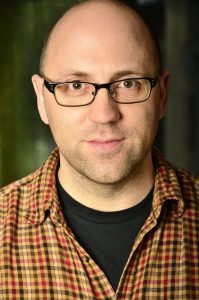 DANIEL KRAUS is a New York Times bestselling author. He co-authored THE LIVING DEAD with legendary filmmaker George a. Romero. With Guillermo del Toro, he co-authored THE SHAPE OF WATER, based on the same idea the two created for the Oscar-winning film. Also with del Toro, Kraus co-authored TROLLHUNTERS, which was adapted into the Emmy-winning Netflix series. Kraus’s THE DEATH AND LIFE OF ZEBULON FINCH was named one of Entertainment Weekly‘s Top 10 Books of the Year, and he has won two Odyssey Awards (for both ROTTERS and SCOWLER) and has been a Library Guild selection, YALSA Best Fiction for Young Adults, Bram Stoker finalist, and more.
Kraus’s work has been translated into over 25 languages. He lives with his wife in Chicago.