




Publication Date: October 20, 2026
TWO TIMELINES. ONE DEVASTATING INHERITANCE. Inspired by the true story of Eugène Marais, one of history’s most extraordinary and forgotten minds.
Southern Africa, turn of the twentieth century. Marais is a brilliant naturalist and iconoclastic journalist whose evolving theories about memory, addiction, and the hive mind are decades ahead of their time. But when tragedy strikes, he disappears into a remote African forest—leaving behind his newborn child and his conscience, and embarking on research that will haunt both their lives.
Thirty years later, his son Charles—now a professor of ancient Buddhist history at Harvard—discovers that the university’s most powerful faculty are mining his father’s research to bolster theories of racial hierarchy. Accompanied by a mysterious Jewish graduate student whose fate has become entangled with his own, Charles must journey to South Africa to confront his father, heal his fractured past, and stop a sinister plot taking root at the world’s most prestigious institution.
Set across two interlocking timelines—from the British concentration camps of the Boer War to the rising shadow of the Third Reich—THE FARTHER SHORE is a heart-wrenching novel about memory, love, and identity, and about the vast distances we’ll travel to find our way home.
THE FARTHER SHORE explores questions that outlast a single life: what a son owes a parent who left him behind, and what a father owes the child he abandoned; how science can be used to heal or destroy; and how faith, grief, and forgiveness can cross generations. It’s a novel about inheritance in every sense—of genius and of guilt, and of the violence that colonialism and fascism leave in their wake—and it offers book clubs and reading groups rich and evocative material to discuss together.
For readers of Anthony Doerr’s All the Light We Cannot See, Abraham Verghese’s Cutting for Stone, Daniel Mason’s North Woods, Michael Ondaatje’s The English Patient, and Ruth Ozeki’s A Tale for the Time Being.

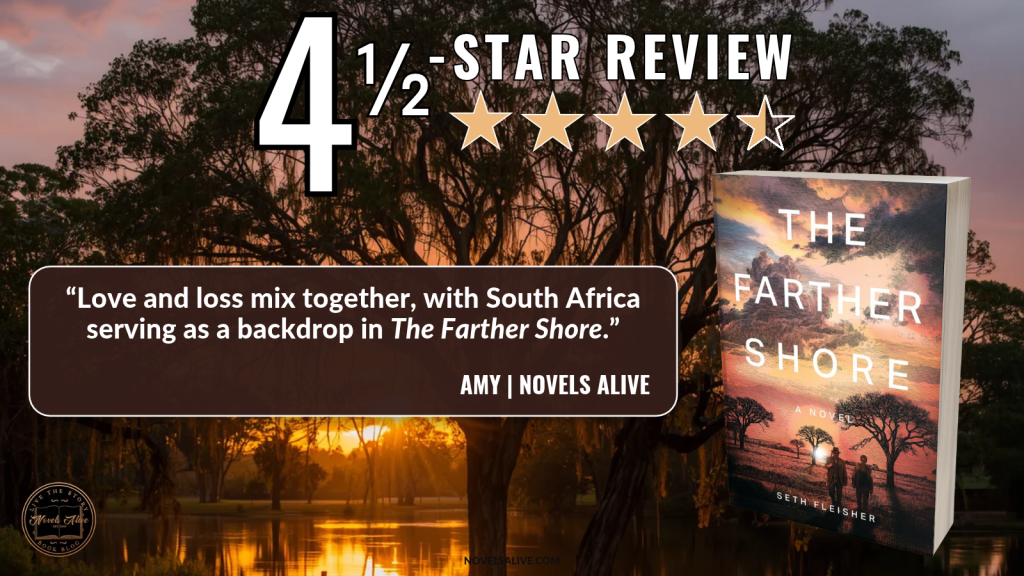
After more than three decades of silence from his father, Harvard professor Charles Marais finds himself at a crossroads.
Author Seth Fleisher delivers a poignant dual timeline inspired by the real story of Marais’s father, Eugène, in The Farther Shore.
It’s a story that offers an opportunity to repair the non-existent father/son relationship while also taking a stand against Harvard’s use of Eugène’s research to advocate for the rights of the superior races.
Pulled between two distinctly unpleasant tasks, readers see the inner turmoil leading up to Charles making a choice. In the meantime, a secondary timeline is weaving the backstory of Eugène and his research.
Love and loss mix together, with South Africa serving as a backdrop in The Farther Shore.




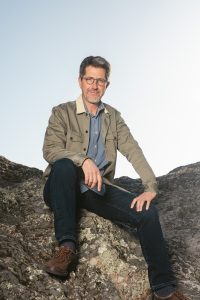 Seth Fleisher is an American author whose work has appeared in the Bellevue Literary Review, Pearl, the Journal of Anthropological Research, and elsewhere. Based in Berkeley, California, he has worked with the World Bank Group and other NGOs in South Africa, India, and more than 40 other countries, and co-founded a U.S.-based democracy initiative. A former Fulbright scholar in Sri Lanka, Seth did Ph.D. work at Harvard and a fellowship at Harvard’s Center for the Study of World Religions.