



Publication Date: June 6, 2026
As I watched my father stand in court, guilty and alone, I realized I was seeing him as a man for the first time.
Gerry Smith grew up fifty-five kilometres from Temagami, the hometown of his long-absent father, Dale King, but he didn’t know the once-legendary hockey player. Even after Gerry, as an adult, reconnects with the Anishinaabe relatives on his dad’s side of the family, Dale remains a mystery — a missing puzzle piece.
It’s not until Gerry’s in his late twenties, struggling with divorce and debts, raising a young son of his own, that Dale finally drops back into his life. In a sports bar in Toronto, Dale pitches a lucrative but illicit business venture, setting in motion an unlikely partnership that will test how far both father and son will go in the name of family. As Gerry tries to make sense of the man behind the myth, he soon realizes that all he thought he knew about his father — and about himself — is only a fraction of the whole story.
In this propulsive debut novel that draws on both Anishinaabe storytelling and film noir influences, The Return of the Nish explores the tragedy of lost opportunities, the cyclical nature of time, and how people and places return to us in new lights.

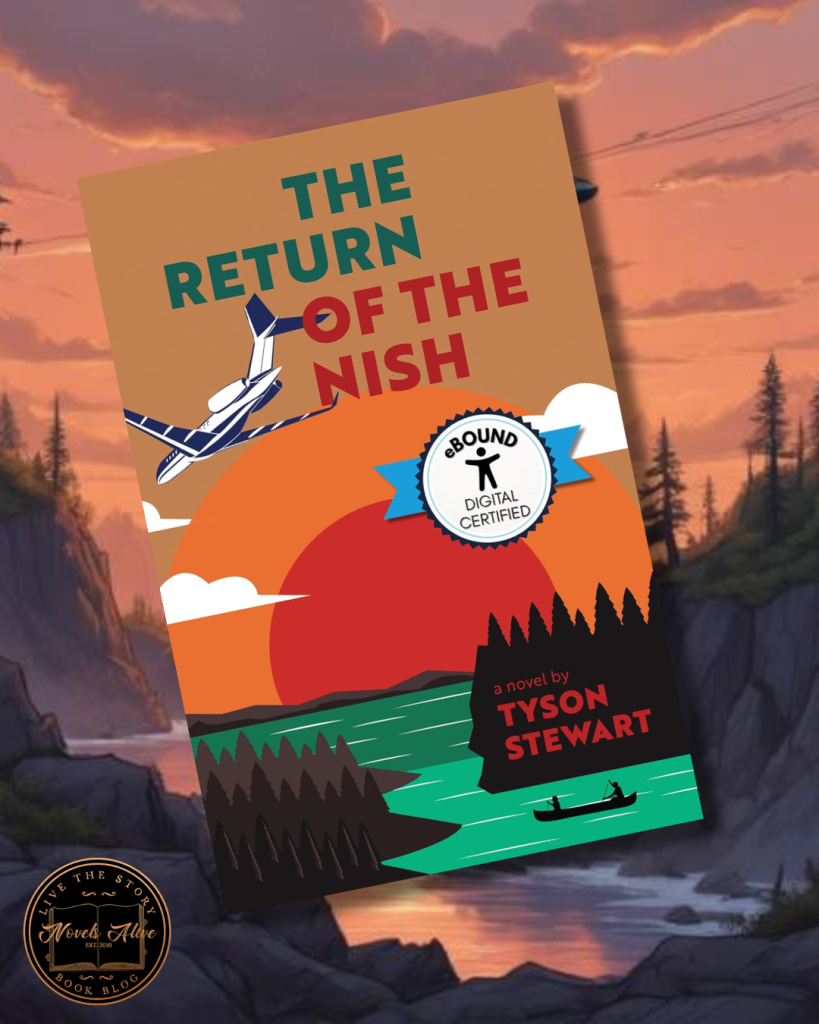
A young man reunites with his absent father’s family, seeding the soil for a disruptive father-son reunion in Tyson Stewart’s promising debut novel, The Return of the Nish.
Gerry Smith never knew his father because he never met his father, Dale King, a legendary international hockey player. When his parents’ relationship ended over Dale’s constant absence from home and infidelities, Gerry took his mother’s last name. But now, in his late twenties, Gerry is a pilot whose work creates the same type of distance and alienation between his wife and son that he experienced with Dale. Gerry decides to reckon with this psychic wound and meets his paternal grandparents and aunts and uncles right when his life is falling apart. The only missing piece of the puzzle is Dale.
Stewart’s novel is an ode to “how people and places return to us in new lights” and how fathers and sons both continue their legacies and create new ones. In connecting with the larger King family, Gerry reconnects with his Indigenous identity as an Anishinaabe. The novel is set in Canada, and the dynamic culture of the Anishinaabe, or “the Nish,” comes to the fore in Stewart’s subtle prose and pacing. Through the Kings, Gerry hopes to eventually arrange a meeting with Dale, who stands him up repeatedly. Until one night in 2008, they met at a tavern for drinks, and Dale learned that Gerry was a pilot.
This is no coincidence, as Dale needs a pilot to fly a plane to Mexico to deliver a load of Native jewelry. Gerry suspects his father is lying to him but accepts the work anyway, needing both an easy payday and more answers about why Dale never contacted him over the years. The trip teaches Gerry what kind of man Dale is, especially when he asks more of him than Gerry wants to give. It also helps Gerry to understand the man he wants to be, for his now ex-wife and Jayden.
The story moves around quite a bit, with jumps in time forward and back, so readers see how Gerry’s life choices and mistakes reflect Dale’s own decades earlier. This mirroring of the father-son dynamic is smart, but the leaps in place and time prevent a longer, more sustained character arc for each.
The Anishinaabe aspect of Gerry and Dale’s contentious new relationship is thoughtful and illuminating, especially in reference to how different they look to one another: with his blond hair and paler skin, Gerry does not even take after Dale. Yet Stewart explores this with tact and poignancy through the lens of the caring and kind King family, who come to love Gerry and their “new” grandson, Jayden.
The Return of the Nish is both redemptive and realistic in its portrayal of fathers, sons, and breaking patterns before they break you.



 Tyson Stewart is an author of the Teme-Augama Anishnabai and an associate professor of Indigenous Studies at Nipissing University. He has delivered numerous lectures and presentations on Indigenous noir in media, exploring the genre’s historical influences and the concept of biskaabiiyang (returning to ourselves).