
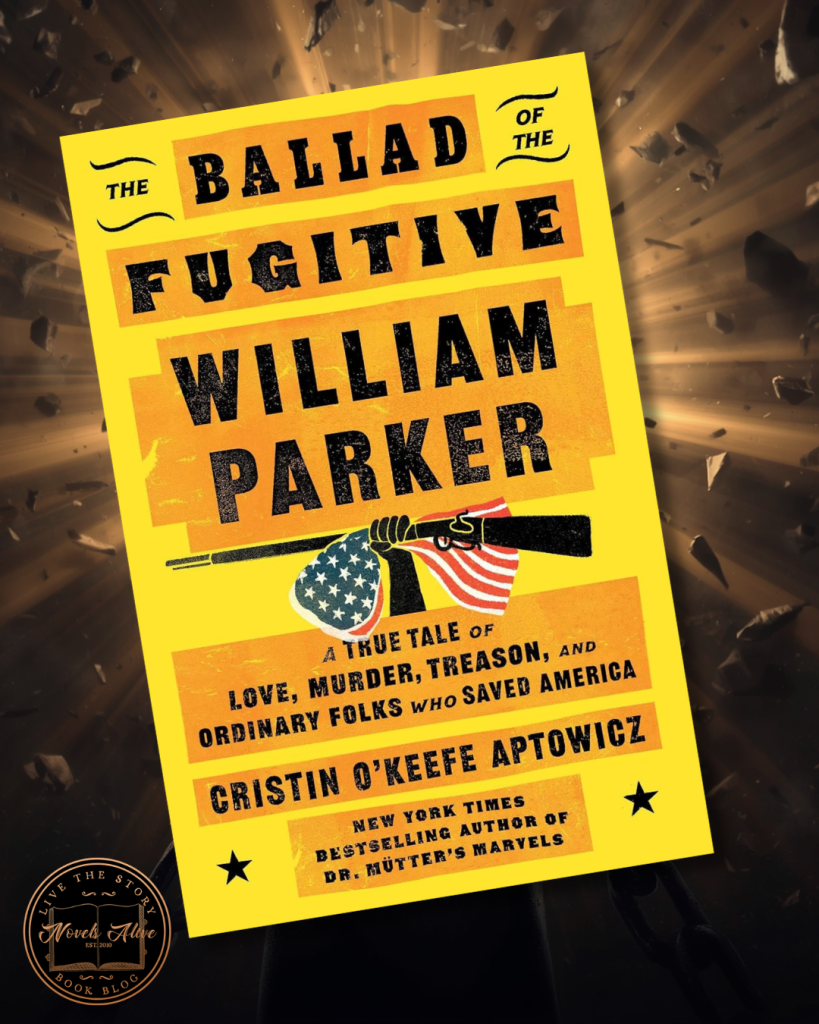

Publication Date: September 8, 2026
The year, 1851. The place, a Quaker farming community turned Underground Railroad stronghold, where a Maryland enslaver had journeyed in pursuit of four men who’d fled his plantation years before. In a few hours, he’d be dead…and twenty-seven men from the village of Christiana would be rounded up and put on trial. Not for his murder, but for treason—for waging war against the United States, at a time when it was a crime against the government to obstruct an enslaver looking to reclaim his “property.”
This is story of what happened in Christiana that September morning—and in the ensuing “trial of the century,” which saw the president himself advise the prosecution on strategy and a sitting congressman serve as lead attorney for the defense. But The Ballad of the Fugitive William Parker is also a much larger tale, one spanning decades, following a whole startlingly diverse community of abolitionists in their fight to convince their fellow Americans of the subversive idea that now found itself on trial: that the nation ought to live up the ideals it was founded on, and respect all men as equals.
It’s a story that whisks readers from the quiet farmlands of Lancaster County—where a self-emancipated man named William Parker, whom legend had it bullets could not kill, rallied his neighbors to ride out each night to battle the slavecatchers who stalked their countryside—to Philadelphia’s genteel Society Hill, where socialite Harriet Forten Purvis had the ear of the mayor (and a cellar filled with fugitives). It’s stylish, propulsive, intimately human tale of bravery, ingenuity, and hope—and of ordinary people with little in common who came together to stand against injustice…and won.

Understanding a historian’s approach to sharing a slice of history enables readers to get a greater sense of perspective.
For example, author Cristin O’Keefe Aptowicz focuses on a specific event in 1851 to illustrate how “a nation is moved to change its mind.” Those words, found in the prologue of The Ballad of the Fugitive William Parker, sets the tone for a richly detailed story in the historical battle for equality.
Meticulously documented with evidence-based footnotes, the author sets the stage by informing the audience of the tensions found in the early colonies, specifically between Maryland and Pennsylvania.
Not only do we gain insight into the political climate building up to September 1851, but the author delivers a master class in re-creating The Christiana Riot and subsequent fallout.
The clash between the slave owners seeking to reclaim their property and the abolitionists takes center stage. The author explores the aftermath, featuring dozens of men charged by the U.S. government with treason because of their beliefs.
While there is a significant amount of information spread across a little over 400 pages, the author’s writing style is easy to digest.
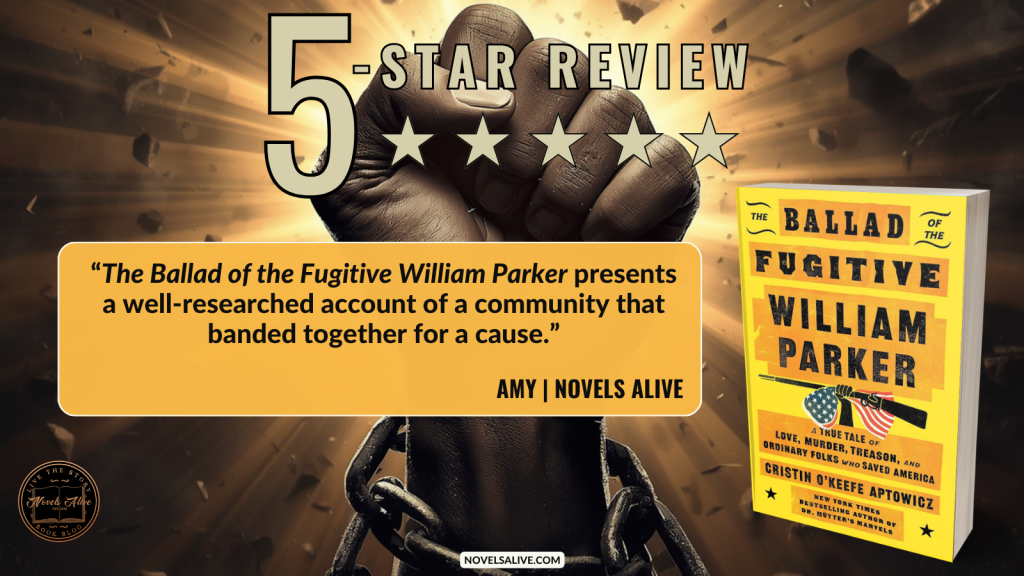
The Ballad of the Fugitive William Parker presents a well-researched account of a community that banded together for a cause.




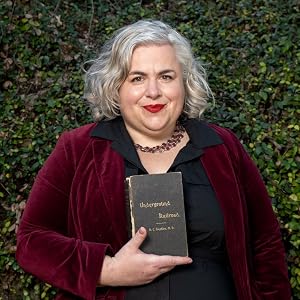 Cristin O’Keefe Aptowicz is a New York Times bestselling nonfiction writer and poet. She is the author of eight books of poetry and three books of nonfiction. Her book DR. MUTTER’S MARVELS: A TRUE TALE OF INTRIGUE AND INNOVATION AT THE DAWN OF MODERN MEDICINE spent three months on the New York Times Bestseller List and appeared on seven national “Best Books of 2014” lists. Her awards include a National Endowment for the Arts Fellowship in Poetry, and residencies at the Amy Clampitt House, Hedgebrook, and the University of Pennsylvania. Her eighth poetry collection, AGAINST VANISHING, was released in 2025.
Her newest nonfiction book, THE BALLAD OF THE FUGITIVE WILLIAM PARKER: A TRUE TALE OF LOVE, MURDER, TREASON, AND ORDINARY FOLKS WHO SAVED AMERICA, will be released in Fall 2026. A seventh-generation Pennsylvanian, Cristin lives in Philadelphia with her husband, the novelist Ernest Cline, and their family.